Stop slowly on yellow markings to charge. Boost uses more battery. Pink markings are the satirical police interaction and do not recharge the battery. Check the circular map at the top right to find the next charging point.
Key takeaways
- Charge is shown top right as “চার্জ”, and you start at 100%.
- Boost costs more charge; ordinary driving is gentler.
- Yellow = charging, pink = police interaction. Never mix them up.
- Confirm that the percentage actually rises before you trust a stop.
Charging is the quiet strategy layer of Baper Rasta. Most players start by treating the game as pure crashing, then discover that a flat battery ends their fun just as surely as a bus. This page explains the meter, what burns charge, what the markings mean and a simple routine that keeps you powered without parking yourself in front of a pursuing crowd. Numbers such as drain rates and refill times are not published by the game, so we do not invent them; instead we explain how to observe them yourself.
হলুদ দাগে ধীরে থেমে চার্জ নিন। বুস্ট বেশি ব্যাটারি খরচ করে। গোলাপি দাগ পুলিশের সঙ্গে মজার ব্যাপার, ব্যাটারি চার্জের জন্য নয়।
Reading the battery and charging map
The “চার্জ” meter at the top right shows your battery percentage. Beneath it, a circular map and a nearby-direction hint help you find charging points; “মি” is metres, so “120 মি” means roughly 120 metres. The game starts you at full charge, so the meter is not urgent in the first seconds, but it is worth glancing at every few moments so that low charge never surprises you.
What drains charge
Moving the auto uses battery, and the game explicitly states that boost (Shift / Space on desktop, the lightning “টান” button on touch) uses more. That makes boost a trade: you gain speed and lose margin. Use it in short bursts on clear road. Ordinary acceleration is gentler on the battery, and braking or coasting does not need a recharge strategy at all.
A useful experiment is to drive a clear stretch normally for ten seconds and note the percentage, then repeat with a short boost. The difference is your own measurement of the cost, and it will be more reliable than any number we could quote.
Yellow charging markings
Spot the marking
Check the map hint between traffic decisions so a charging spot is never a surprise. Do not wait until the meter is nearly empty.
Slow down early
Release the accelerator and brake smoothly so you can stop inside the marked area rather than overshooting. Brake early; the auto keeps rolling.
Check the percentage rises
Confirm the charge number actually increases before you rely on the stop. Then watch the road, because pursuers may still be near.
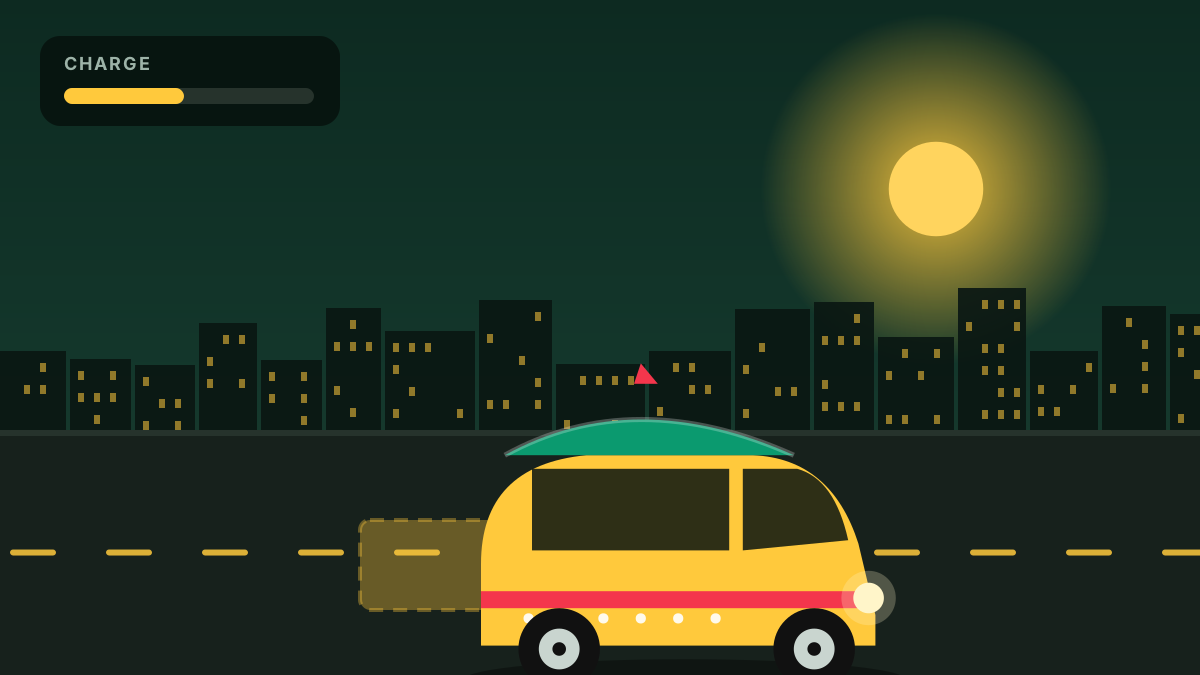
The original instructions say to stop on yellow markings; a refill was not completed in our short recorded test, so we cannot say how long a full recharge takes or whether partial stops help. Treat your first few charging stops as experiments and watch the meter closely.
Pink police markings are not charging
Pink markings belong to the game’s satirical police “tea-money” interaction. They are not a battery refill, and their exact cost and effects are not documented here, so do not build a survival plan around them. The visual similarity to a charging zone is part of the joke and a classic trap for new players: if your battery is low and you stop on pink, expect an interaction rather than a recharge.
Do not confuse the colours: yellow = charge, pink = police interaction.
A simple charging plan
- Learn the road with ordinary acceleration; save boost for clear stretches.
- Glance at the battery every few seconds, not only when it is low.
- Head for a yellow marking while you still have a comfortable margin.
- Approach slowly and stop fully inside the marking.
- After charging, move on. Long stops can let pursuers catch up.
A good rule of thumb is to start heading for a marking when the meter drops to around half. That is a personal habit rather than a published number, but it leaves enough room for detours around buses and trucks. Adjust it as you learn the map.
Common charging mistakes
Boosting to the marker
Arriving too fast makes you overshoot. Brake early, then ease in.
Stopping on pink
Pink is the police joke, not a refill. Check the colour before you brake.
Waiting too long
Starting your search at 5% leaves no room for traffic. Plan earlier.
Charging while chased
Stopping with pursuers near is how runs end. Shake them first, then charge.
Risk versus reward
Because the game is a satire about chaos, you can choose to ignore charging and simply drive until something goes wrong. That is a valid style, but it shortens runs. Players who want longer runs treat charging like a pit stop: a deliberate moment of low risk between high-risk stretches. Players who want maximum national loss in minimum time treat the battery as a ticking budget and spend it on boost. Neither is wrong; what matters is that you decide on purpose instead of by accident.
What isn’t verified
We do not publish a refill time, a drain rate or the behaviour at 0% charge, because those are not documented by the game and we do not want to invent numbers. If you have measured them, share your notes, ideally with the date and the device you used.
Measure it yourself: a battery worksheet
Because the game does not publish drain rates, the most honest way to understand charging is to measure it. Here is a simple worksheet you can run in about five minutes. Start a fresh run at 100%. Drive in a straight line on clear road with ordinary acceleration for ten seconds and write down the percentage. On the next run, drive the same stretch for ten seconds with short boost bursts and write down the percentage again. Repeat each test three times and average the results. The gap between the two averages is your personal boost cost on your device.
| Test | What to do | What to record |
|---|---|---|
| A. Baseline | 10 seconds of ordinary driving on clear road | Battery % after 10 s |
| B. Boost | 10 seconds with two short boost bursts | Battery % after 10 s |
| C. Charging stop | Stop fully inside a yellow marking for 10 seconds | Does the % rise? By how much? |
| D. Pink marking | Observe (carefully) what happens on a pink marking | Does the battery change? What else happens? |
If you share your findings with us, include the date, your browser and whether you were on a phone or a computer; behaviour can differ between devices. We will only publish numbers that more than one reader has reproduced, and we will credit you if you wish.
Charging on PC versus mobile
The charging rules are the same on every device, but your ability to execute them differs. On a keyboard, braking into a marking is a matter of releasing W and tapping S, which most players find precise. On a touch screen, the brake button is larger but your thumb may also be covering the marking you are aiming for, so many players switch to landscape for charging stops. If you keep overshooting markings on a phone, release the accelerator earlier than feels natural and let the auto roll to a stop, then use short brake taps rather than a long hold that might reverse you out of the zone.
Another practical difference is attention. On a phone, you are more likely to be interrupted by notifications. A message banner that covers the battery meter at the wrong moment is a real cause of surprise empty batteries, so consider turning on a do-not-disturb mode before a long session.
Charging as part of the joke
It is worth remembering that Baper Rasta is a satire. An electric auto-rickshaw that has to stop on a yellow marking to charge, while a pink marking sends you to a corrupt-police gag, is a commentary on everyday frustrations: power, infrastructure and bribes. Part of the fun is that the game turns those frustrations into mechanics. Understanding that framing can make the charging system feel less like homework and more like another punchline you get to drive through.
Frequently asked questions
How do I charge in Baper Rasta?
Slow down and stop inside a yellow marking on the road. Confirm the battery percentage rises. Boost uses more battery, so use it sparingly.
What do the pink markings do?
Pink markings belong to the satirical police “tea-money” interaction. They are not a battery refill, and their exact cost and effects are not documented here.
What drains the battery fastest?
The game says boost uses more charge than ordinary driving. Short boost bursts are safer for your battery than holding boost.
What happens at 0% battery?
We have not verified the behaviour at zero charge in play, so we do not claim one. Keep a safe margin instead of testing it.
How long does charging take?
No refill time has been published and we have not measured one. Confirm the percentage is rising and watch for pursuers.
Where can I find charging spots?
Use the circular map at the top right and the direction hint beneath it; “মি” means metres.
An independent fan team. Facts come from the game’s own on-screen instructions and public sources, and anything unverified is labelled. Last reviewed 30 October 2026. See our editorial standards or send a correction.